Group paybacks
How to Remind a Group to Pay You Back Without Spamming Everyone
If you paid first for a group cost, send one clear group update first, then follow up individually only with the people whose shares are still open. That keeps everyone informed without repeatedly pinging people who already paid.
The safest reminder names the expense, the share, the next step, and the fact that later follow-ups will be individual instead of repeated in the group chat.
Copyable group reminder
This works because it gives everyone the same information without naming or embarrassing anyone who has not paid yet.
If you still need the full record structure first, start with how to track who paid you back for a group expense. If you need to calculate shares or confirm paid / partly paid / still-open status, use the group payback tools first. This page focuses on what to say once the status is clear enough to send the right message.
If the booking has not happened yet, set the payment timing, deadline, and cancellation rule before you get to the reminder stage.
Why group reminders feel awkward
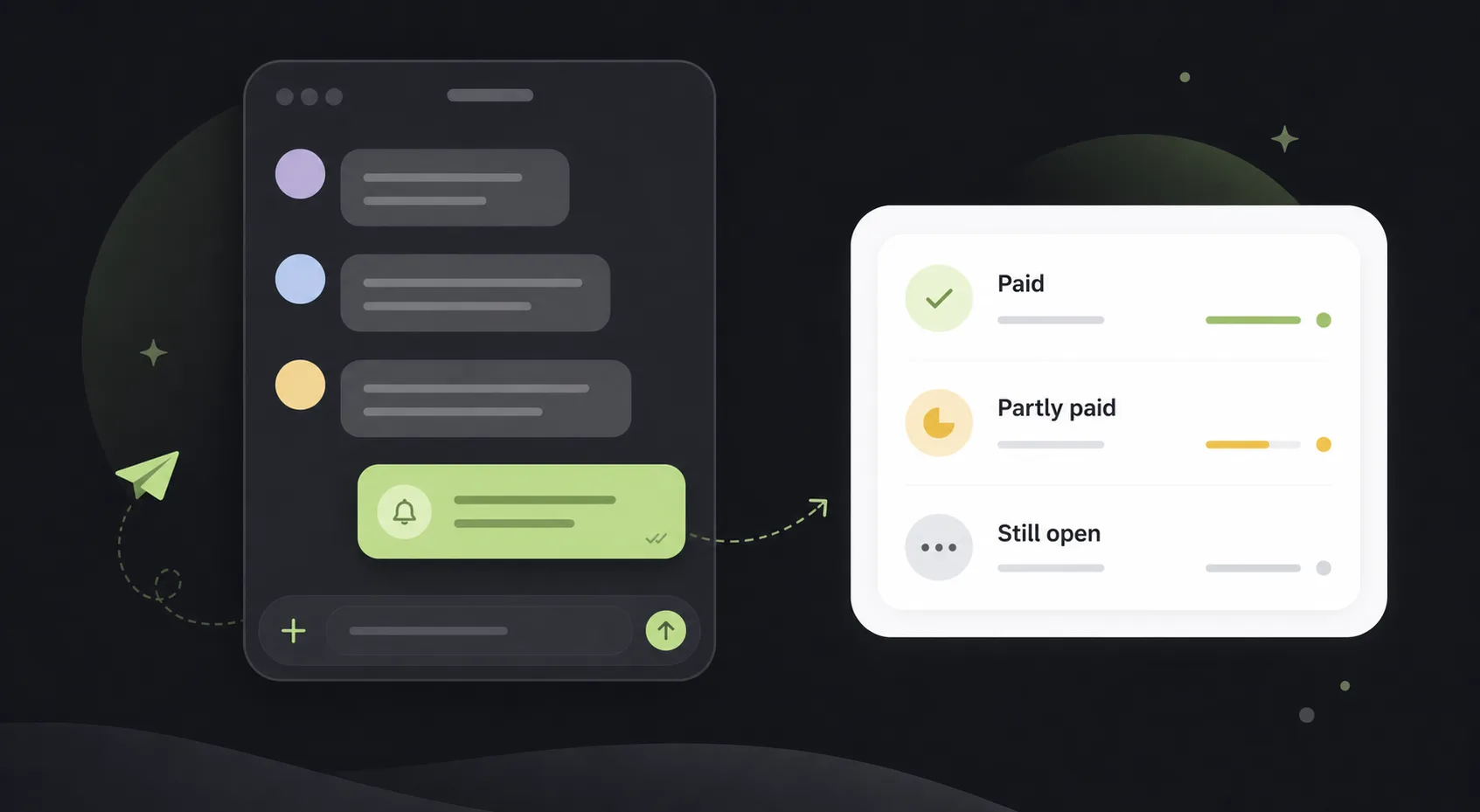
Group paybacks get awkward because the same reminder lands differently for different people. Someone who already paid may feel annoyed. Someone who partly paid may need a different message. Someone who forgot may feel embarrassed if they are named in public. A good reminder separates the group update from the individual follow-up.
This is the common problem behind group gifts, tickets, dinners, bookings, and deposits: the math may be simple, but the follow-up can feel awkward once some people paid, some partly paid, and some are still open.
The safest pattern is not a louder group chat reminder. It is one neutral update, then private check-ins.
Rule of thumb: send one neutral group update, then move open balances to individual messages.
Before you remind the group, check these five things
If the original shares are still unclear because people ordered different amounts, decide what a fair split looks like before sending the reminder.
If a cancellation or refund changed the shares, recalculate the shared cost before sending a group update or private reminder.
- What was the total cost?
- Who agreed to be included?
- Is each share equal, custom, or based on what each person used?
- Who has already paid fully?
- Who partly paid or still has an open balance?
Need to confirm the shares first?
If the shares are clear but the payback status is messy, use the Group Payback Calculator to confirm who paid, who partly paid, and what is still open before sending the reminder.
If you have not calculated each person’s share yet, start with the Split Expense Calculator instead.
Should you remind the whole group or message people individually?
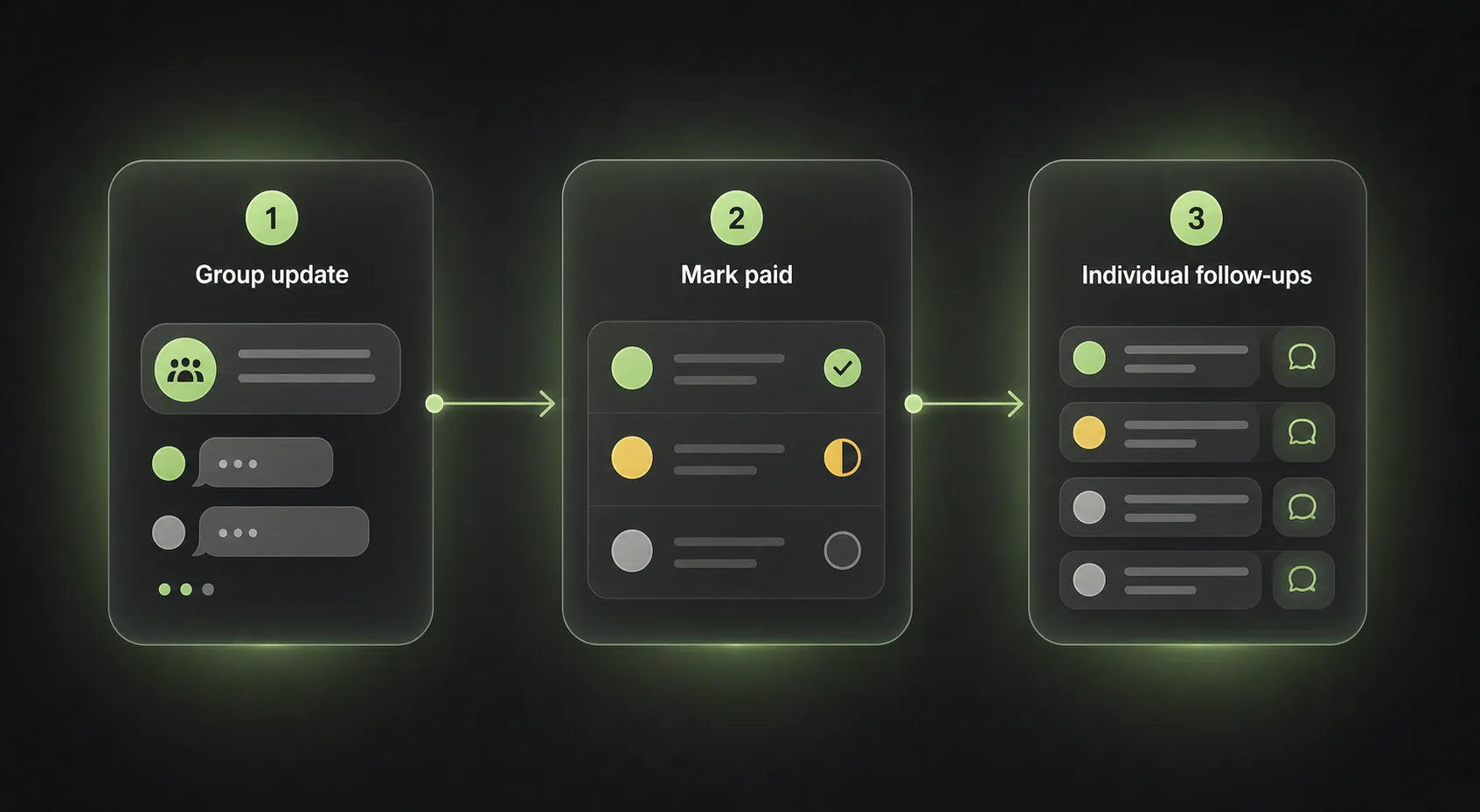
The first reminder can usually go to the group because everyone needs the same update. After that, individual messages are usually better because only some people still need to act.
This is the difference between a group payback reminder message and a one-to-one follow-up.
| Situation | Best message type | Why |
|---|---|---|
| Nobody has paid yet | One group update | Everyone needs the same reminder. |
| Some people paid and some have not | One group update, then individual follow-ups | It avoids bothering people who already paid. |
| Only one or two people still owe | Individual message | A group reminder can start to feel like public pressure. |
| Someone paid part of their share | Individual message | The remaining amount is specific to them. |
| Someone says they already paid | Individual clarification | It avoids arguing or correcting records in public. |
| It is an office, team, or group gift | Usually one group update, then individual messages | Public money pressure can feel uncomfortable. |
Once only one person still owes, the situation becomes closer to a one-to-one reminder. Use the one-person reminder guide if you need wording for a private follow-up.
If you are not sure, use one calm group update first. After that, keep follow-ups private.
A simple reminder ladder for group paybacks
You do not need to send the same reminder again and again. Use a ladder: one group update, one status update if needed, then individual messages only for open balances.
Step 1: First group update
Use this when the group has not had a clear update yet.
Step 2: Thank people who already paid
This reassures people who already paid and makes the next follow-up feel less public.
Step 3: Individual reminder for someone who still owes
This is better than naming the person in the group chat.
Step 4: Partial-payment follow-up
Use this when someone paid part of their share but not the full amount.
Step 5: If someone says they already paid
Do not argue in the group chat. Treat it as a record-checking issue, not a trust issue.
Step 6: If someone cannot pay right now
This keeps the balance clear without turning the conversation into a fight.
Step 7: Final closing message
Use this only after a reasonable first reminder and check-in. Keep it private if only one person still owes.
If the status is clear but you want help polishing the wording, use the polite payback reminder generator.
For more wording options, browse repayment reminder text examples.
Example: you paid first for concert tickets
Imagine you paid $180 for four concert tickets. Your own ticket is already covered because you paid first. Three friends each owe $45. One paid fully, one paid partly, and one has not paid yet.
This is the same workflow if you paid for tickets and friends have not paid, or paid for a group gift and people still owe. The point is to know who has paid and who still owes before choosing the message.
| Person | Share | Paid | Status | Best next message |
|---|---|---|---|---|
| Maya | $45 | $45 | Paid | No reminder needed |
| Leo | $45 | $20 | Partly paid | Send a private partial-payment follow-up |
| Sam | $45 | $0 | Open | Send a private open-share reminder |
| Nina | $45 | Unknown | Needs confirmation | Ask privately if the payment was sent |
The group does not need four more reminders. The group needed one clear update. After that, each open balance needs the right individual message.
What not to send in the group chat
The fastest way to make a group payback feel tense is to turn the reminder into public pressure. Avoid messages that shame people, annoy people who already paid, or make the group choose sides.
Who still has not paid??
I’m still waiting on Sam and Leo.
Can everyone stop ignoring this?
Last chance to send the money.
I paid for everyone and nobody cares.
A better rule is: keep the group message factual, and keep individual balances private.
That keeps the reminder useful without public shaming.
Quick update: I’ve marked the payments I received. If anything is still open, I’ll follow up individually so the group chat does not get noisy.
When a simple message is enough
You may not need an app or tracker for every group expense. A simple message is usually enough when the group is small, everyone owes the same amount, nobody has paid partly, and everyone is likely to settle the same day.
A simple message is enough when
- there are only two or three people involved;
- everyone owes the same amount;
- nobody has made a partial payment;
- the payback will be settled today;
- you do not need a history later.
Then keep it light
Send the first group update and move on once everyone pays. If the cost closes quickly, the message did its job.
If the same people share costs again and again, a running balance may be clearer than treating every cost as a separate group payback.
When a record helps
When a tracker helps
A tracker becomes useful when the group payback stays open longer than expected or people pay in different ways at different times. At that point, the problem is not just the reminder — it is remembering the current status clearly.
A tracker helps when
- people pay at different times;
- someone pays only part of their share;
- the group expense stays open for days or weeks;
- you need to know who still owes without scrolling through chat;
- you want to send a calm update based on the current record;
- you do not want everyone else to install an app just to understand what is open.
How You Owe Me fits
You Owe Me is a calm record and communication layer for money between real people. It is not a bank, lender, payment processor, debt collector, legal tool, or accounting system.
One person can keep the group payback record, mark people as paid or partly paid, and use the current status to send clearer reminders. Other people do not need to install the app for the record to stay useful.
For open group paybacks that continue over several days, the Group Payback Tracker explains how You Owe Me keeps paid, partly paid, and still-open shares clear.
Track group paybacks in You Owe Me
Use it when paid, partly paid, and still-open statuses keep changing after one person paid first.
Group payback reminder FAQ
Should I remind everyone in the group chat or message people individually?
Send one clear group update first if everyone needs the same information. After that, message only the people whose balances are still open so you do not keep pinging people who already paid.
Should I name who has not paid yet?
Usually no. Naming unpaid people in the group chat can feel like public pressure. It is usually better to send a neutral group update, then follow up individually with anyone whose share is still open.
How often should I remind a group to pay me back?
Start with one group update and a clear check-in day. If money is still open after that, follow up individually rather than sending repeated reminders to the whole group.
What should I say if someone partly paid?
Thank them for the amount they sent, then name the remaining balance clearly. For example: “Thanks for sending $20. I marked that down, so $25 is still open from your $45 share.”
What if someone says they already paid?
Ask for a quick confirmation instead of arguing. You can say: “Thanks for checking. I may have missed it — can you remind me when you sent it or what method you used?”
Do other people need to install You Owe Me for group paybacks?
No. One person can keep the record, mark payments and partial payments, and share clear updates when needed.
Keep the reminder calm by keeping the record clear
Group payback reminders are easier when you know the current status before you write the message. If everyone pays right away, a simple group update is enough. If payments come in later, partly, or through different methods, You Owe Me helps you keep the record clear and follow up without relying on memory or old chat messages.
For open group paybacks that continue over several days, the Group Payback Tracker explains how You Owe Me keeps paid, partly paid, and still-open shares clear.
Published · Updated