Roommate money guide
How to Track Money Between Roommates Without Rebuilding Bills Every Month
To track money between roommates, record each shared bill once, note who paid, who was included, count any repayments already made, and keep the remaining balance visible. For one monthly settle-up, a calculator is enough. For ongoing rent, utilities, groceries, and partial repayments, a running balance is easier.
The goal is not to turn your home into an accounting project. The goal is to make the shared record clear enough that nobody has to search old chats, receipts, or bank alerts at the end of every month. If the idea is new, start with the plain-English guide to what a running balance means.
Direct answer
The simple way to track roommate money
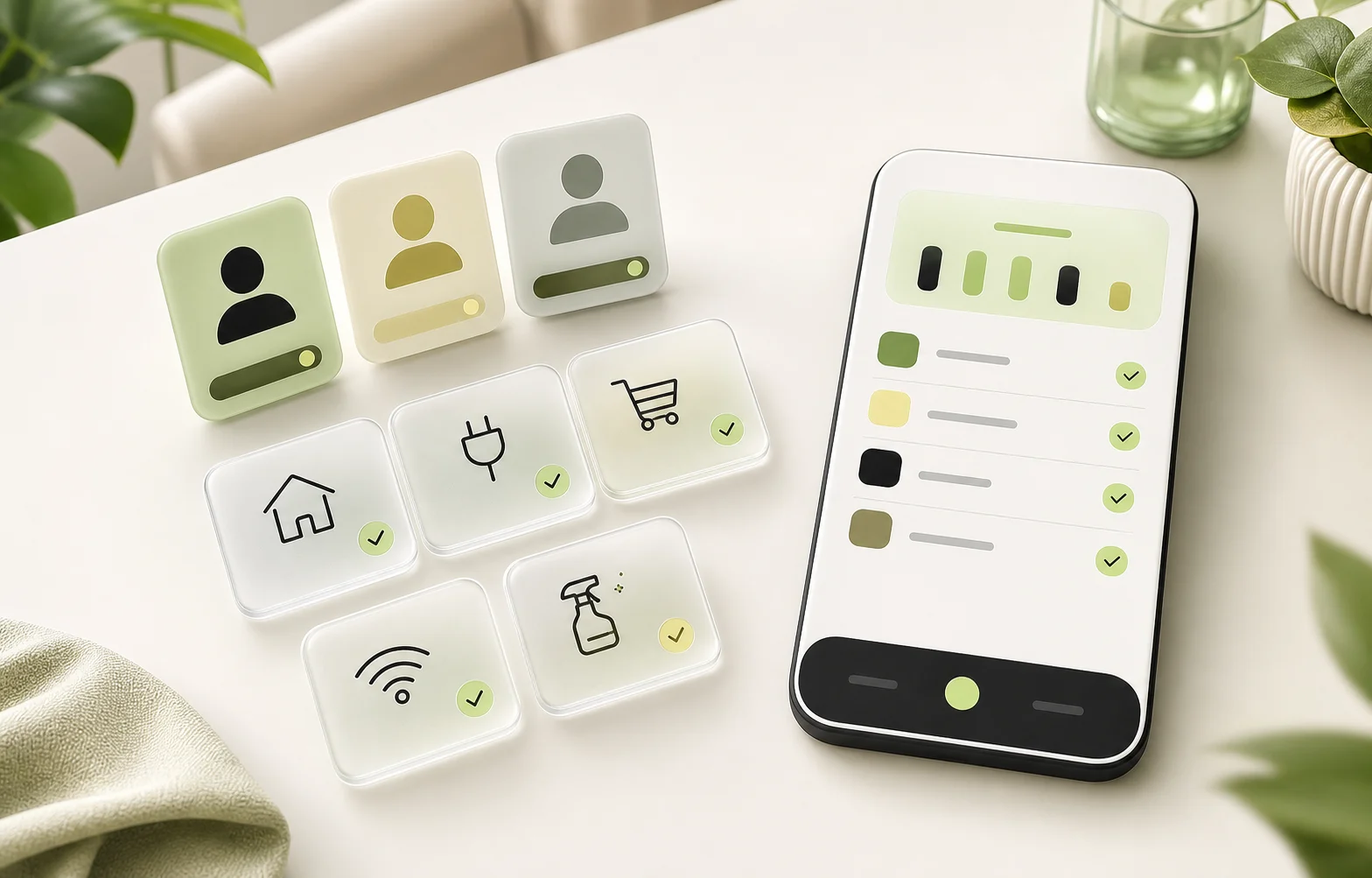
The simplest way to track roommate money is to keep one shared record with five details for each item: what was paid, how much it cost, who paid, who should share it, and what has already been repaid. Once those details are recorded, the remaining balance is much easier to trust.
Expense
Rent, internet, groceries, supplies, repairs, or subscriptions.
Amount
The exact amount paid.
Paid by
The roommate who covered it first.
Included people
Only the roommates who should share that cost.
Repayments
Any money already sent back before final settle-up.
If you keep those five details clear, the monthly question changes from “what do we remember?” to “what does the record say?”
If you have not agreed on the rules yet, start with the guide to splitting rent, utilities, and groceries with roommates, then use this page for the ongoing tracking method.
Why roommate expenses get confusing so quickly
Roommate bills feel simple at first because everyone agrees to split things fairly. The confusion starts when real life adds timing, exceptions, and partial repayments.
One person pays first
One roommate covers rent, internet, or a grocery run, then waits for everyone else to send their share. A fixed bill may leave that roommate’s account automatically before anyone else notices it renewed.
Not every bill includes everyone
Two roommates may share groceries while all three split utilities. A simple equal split is not always accurate.
Small purchases disappear
Trash bags, detergent, kitchen items, and quick shared groceries are easy to forget if they are not recorded immediately.
Partial repayments blur the balance
Someone sends part of what they owe, but the rest still needs to stay visible.
This is why roommate money often becomes a memory problem instead of a math problem. The numbers may be small, but the history gets scattered across messages, receipts, bank notifications, and “I’ll send it later” promises.
A practical roommate expense tracking method
Use this workflow whether you track bills in an app, a calculator, a spreadsheet, or a shared note. The important part is that every shared cost follows the same pattern.
If you want to use this method manually, open the Roommate Expense Tracker Spreadsheet. It keeps expenses, agreed shares, repayments, opening positions, and a monthly summary in one workbook.
If your roommate record is turning into a spreadsheet, the spreadsheet vs app comparison can help you decide whether to keep it manual or move to a running-balance app.
-
Agree what counts as a shared cost
Before tracking anything, decide what belongs in the shared record. Rent, electricity, water, internet, household supplies, and shared groceries usually belong there. Personal snacks, private purchases, and individual subscriptions usually do not.
- Rent or rent-related extras
- Electricity, water, gas, internet
- Shared groceries
- Cleaning supplies and household items
- Repairs or move-out costs
- Shared subscriptions or services
-
Record each bill once
Each bill should appear one time with the amount, payer, and included roommates. Avoid putting the same bill in multiple chats, notes, and spreadsheets because that creates competing versions of the truth.
-
Include only the people who shared that bill
Not every cost has to include every roommate. If only two people shared groceries, split that grocery bill between those two people. If all roommates used electricity and internet, include everyone.
-
Count repayments separately
A repayment is not a new shared expense. It is money moving back toward the person who paid first. Keep repayments separate so the remaining balance stays accurate.
-
Settle the remaining balance, not the whole month again
At the end of the month, you should not need to re-argue every receipt. You only need the current remaining balance and a clear summary of how you got there.
Example: three roommates tracking one month
Here is a simple example of how the record works when different roommates pay for different things.
Maya, Alex, and Sam share an apartment. Maya paid rent and cleaning supplies. Alex paid internet. Sam paid groceries. Alex already sent Maya a partial repayment before the final monthly settle-up.
| Item | Paid by | Amount | Shared by |
|---|---|---|---|
| Rent | Maya | $1,800 | Maya, Alex, Sam |
| Internet | Alex | $60 | Maya, Alex, Sam |
| Groceries | Sam | $120 | Maya, Alex, Sam |
| Cleaning supplies | Maya | $30 | Maya, Alex, Sam |
| Partial repayment | Alex → Maya | $200 | Already paid |
Final monthly result
Total shared bills: $2,010. If split equally, each roommate’s share is $670. After Alex’s $200 repayment is counted, Alex still owes Maya $410 and Sam owes Maya $550.
The important part is that the repayment is counted once, the remaining balance is visible, and nobody has to rebuild the month from old messages.
For a one-time calculation, use the calculator to work out this month’s adjusted roommate share, including fixed and usage-based portions, days away, or a temporary occupant when the household has agreed on those assumptions. If this pattern repeats every month, keep it as an ongoing roommate balance in You Owe Me.
When a calculator is enough — and when a running balance helps
Use a roommate bill calculator when:
- You only need one monthly settle-up
- Everyone is ready to pay now
- There are only a few bills
- You do not need reminders
- You do not need a long-term history
- You are estimating a move-out balance
Use a running balance when:
- Roommate costs happen every week or month
- One roommate often pays first
- Partial repayments happen
- Old balances carry over
- Recurring bills need to be remembered
- You want a clear history before bringing it up
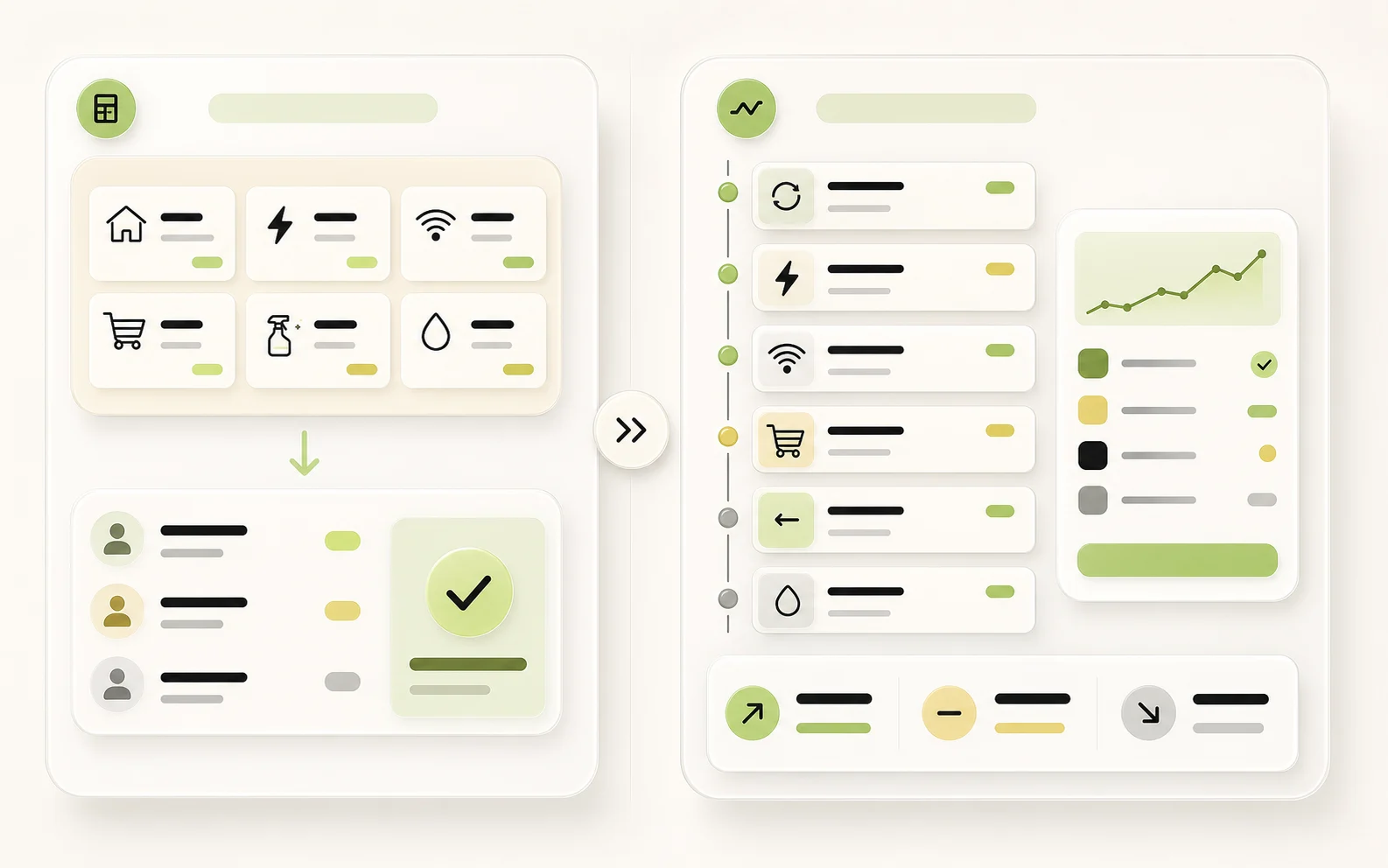
A calculator answers “who owes whom this time?” A running balance answers “what is still open after everything that has happened?” Roommate households often need both: a quick monthly calculation for simple months, and a running record when bills, repayments, and exceptions keep changing.
If your roommate group is deciding between Splitwise-style group tracking and a private running balance, read the Splitwise alternative guide.
If you only need to calculate this month’s rent, utilities, groceries, repayments, and previous balance, use the Roommate Bill Split Calculator. For one shared purchase or one simple bill, the Split Expense Calculator may be enough. For a two-person roommate balance that keeps changing, the Running Balance Calculator shows how expenses and repayments update the current amount.
Example: when the balance carries into next month
Some roommate balances do not end cleanly at the end of the month. If someone only pays part of what they owe, the remaining amount should carry forward instead of disappearing into a new calculation.
| Date | What happened | Balance effect | Current balance |
|---|---|---|---|
| May 31 | Alex still owed Maya from last month | Starting balance +$40 | Alex owes Maya $40 |
| June 5 | Maya paid $90 for electricity, split three ways | Alex’s share +$30 | Alex owes Maya $70 |
| June 12 | Alex paid Maya back part of the balance | Repayment -$25 | Alex owes Maya $45 |
| June 18 | Alex paid $60 for internet, split three ways | Maya’s share -$20 | Alex owes Maya $25 |
This is where an ongoing record is different from a one-month split. The question is no longer only “how should we divide this bill?” The question becomes “after last month, this month’s bills, and the repayments already made, what is still open?”
Use the calculator for one monthly settle-up. Use a running balance when old balances, new bills, and repayments keep interacting.
Common roommate money situations and how to handle them
One roommate pays most of the bills
Track every bill they pay, then subtract that roommate’s own share. The final balance should show how much the other roommates still need to repay, not just how much the payer spent.
Only some roommates shared a cost
Do not put every bill into an equal split by default. If only two roommates shared groceries or a streaming subscription, include only those two people for that item.
Rent is not split equally
If rooms are different sizes or one person has a private bathroom, use custom shares for rent. Then keep utilities or household supplies equal if that is the household agreement.
Someone already paid part of what they owe
Record the partial repayment separately. The remaining balance should update without making everyone recalculate the original bill.
A roommate is moving out
Create a final settle-up that includes unpaid bills, shared supplies, deposits, repairs, and any previous balance. Keep the summary clear and factual so the move-out conversation is about the record, not memory.
Small household supplies keep adding up
Small purchases are exactly what a record is for. Detergent, toilet paper, trash bags, cleaning spray, and kitchen items may feel too small to mention one by one, but the balance can drift if the same person keeps paying.
Copyable messages for roommate settle-ups
Once the balance is clear, the message can stay simple. Keep it specific, factual, and calm.
The wording should feel like a clear summary from a shared record. If the number is clear but the wording still feels awkward, browse repayment reminder text examples. For a more personalized follow-up, use the Polite Payback Reminder Generator after the balance is clear.
Common mistakes that make roommate bills harder
Tracking bills only in group chat
Chats are good for communication, but they are not a clean ledger. Important numbers get buried between unrelated messages.
Mixing expenses and repayments
A grocery bill and a repayment are different things. Mixing them makes the remaining balance harder to trust.
Splitting everything equally by default
Equal splits are simple, but they are not always fair. Some bills only include some roommates, and rent may need custom shares.
Waiting until the end of the month to remember everything
The longer you wait, the more the record depends on memory instead of facts.
Starting a new record every month without carrying old balances
If last month was not fully settled, the remaining balance should carry forward. Otherwise the household loses track of what is still open.
A simple roommate expense tracking template
If you are starting manually, use this structure for each shared cost.
| Date | Item | Paid by | Amount | Shared by | Repayment? | Notes |
|---|---|---|---|---|---|---|
| May 1 | Rent | Maya | $1,800 | Maya, Alex, Sam | No | Equal split |
| May 5 | Internet | Alex | $60 | Maya, Alex, Sam | No | Monthly bill |
| May 12 | Groceries | Sam | $120 | Maya, Alex, Sam | No | Shared kitchen groceries |
| May 20 | Partial repayment | Alex → Maya | $200 | Alex, Maya | Yes | Counts against Alex’s balance |
This template is enough for a small household if everyone updates it consistently. If the same bills repeat, repayments happen later, or old balances carry over, an app with a running balance is easier to maintain.
You Owe Me
How You Owe Me helps with ongoing roommate expenses
You Owe Me is useful when roommate money is not one clean bill. It keeps the history, repayments, recurring costs, and remaining balance in one place, so the next conversation starts from a clear record. For ongoing household costs, the roommate expense tracker page explains how You Owe Me keeps rent, utilities, groceries, repayments, and balances clear over time.
You Owe Me combines running balances, reminders, Recurring Entries, and Money Conversations in one place.
One running balance
See what is still open after bills, repayments, and previous balances are counted.
Shared expenses
Record rent, utilities, groceries, supplies, repairs, and other roommate costs.
Partial repayments
Add money that was already sent back without losing track of the remaining amount.
Recurring entries
Useful for monthly utilities, subscriptions, or household costs that repeat.
Reminders
Set a reminder when a roommate plans to repay later or when the household usually settles up.
Money Conversations
Turn the real balance and history into a calmer follow-up message when wording feels awkward.
Live Link or clear summary
Share a clear view of the balance when someone needs to understand where the number came from.
Use the calculator once. Use You Owe Me when roommate costs keep changing.
A monthly calculator is helpful for one settle-up. You Owe Me is better when rent, utilities, groceries, repayments, and old balances keep moving over time.
Want to see how this works as an ongoing app workflow? Visit the roommate expense tracker, or read real App Store reviews from people using You Owe Me in everyday money situations.
Related resources
Related roommate tools and guides
Use these next if you need one monthly calculation, the app workflow, or clearer wording after the roommate balance is known.
Frequently asked questions
What is the easiest way to track money between roommates?
The easiest way is to record each shared bill with the amount, who paid, who was included, and any repayment already made. For one monthly settle-up, a calculator may be enough. For ongoing roommate costs, a running balance is easier because it keeps the history and remaining balance visible.
How do roommates keep track of shared bills?
Roommates can keep track of shared bills by recording rent, utilities, groceries, supplies, and repayments in one place. The record should show who paid first, who shared the cost, and who still owes whom after repayments.
What should I do if one roommate pays most bills upfront?
Record each bill that roommate paid, subtract their own share, and track what the other roommates repay. The final balance should show what is still owed, not just the total amount the payer spent.
How do you split roommate expenses when not everyone shares the same bill?
Include only the roommates who shared that specific cost. For example, utilities may include everyone, while a grocery run or subscription may include only two roommates.
How do you handle partial repayments from roommates?
Track partial repayments separately from expenses. A repayment reduces what someone owes, but it should not be treated as a new shared bill.
Is a spreadsheet enough for roommate expenses?
A spreadsheet can work if everyone updates it consistently and the situation is simple. It becomes harder when bills repeat, partial repayments happen, old balances carry over, or you need reminders and a clear history on your phone.
Should roommate bills be settled every month?
Monthly settle-ups are usually easier because they keep balances from growing and make the record easier to check. If everything is not fully paid, carry the remaining balance forward clearly.
Can You Owe Me track roommate rent, utilities, and groceries?
Yes. You Owe Me can track shared expenses, repayments, recurring costs, reminders, and running balances between roommates, so you can see what is still open without rebuilding the month from memory.
Clear numbers. Clear history. Clear next message.
Roommate money gets easier when every shared bill, repayment, and remaining balance has one place to live. Use a calculator for one clean monthly settle-up. Use a running balance when the household story keeps changing.
Updated