Friend money boundaries
How to Handle a Friend Who Keeps Borrowing Money
This guide is for the moment when “just this once” has started to feel like a pattern. If a friend keeps borrowing money, stop treating every request like a brand-new situation. Look at the pattern, write down anything already open, and decide what boundary you can honestly keep. A clear boundary is not unkind; it is often what keeps money from quietly damaging the friendship.
The goal is not to punish your friend or turn the relationship into a spreadsheet. The goal is to stop relying on memory, guilt, and vague promises when money has started to repeat.
Short answer
The short answer
When a friend keeps asking to borrow money, the kindest next step is usually to pause the pattern. Separate the current request from the history, write down anything still open, and choose one boundary for what you can and cannot do next. You may still decide to help, but it should not be a vague yes that leaves both people remembering the arrangement differently.
If you do not want to lend again, a simple no is enough. If you do help again, make the amount, repayment expectation, and next check-in clear before money moves.
Best all-purpose script
What should you do if a friend keeps borrowing money?
Repeated borrowing is a pattern problem, not only a wording problem. Use the row that matches what is actually happening before you answer the next request.
| Situation | What it means | Best next step | What to say |
|---|---|---|---|
| They ask often but always repay. | The pattern may still need clearer expectations, even if repayment usually happens. | You can keep helping only if the terms stay clear and you do not feel resentful. | “I can help this time, but let’s write down the amount and when you expect to repay it so neither of us has to remember later.” |
| They still have not paid you back from last time. | The new request is not separate from the old balance; it adds to money that is already open. | Pause new lending until the old amount is clear. | “I can’t lend more while the previous amount is still open. Let’s first agree on what’s left and when you can repay it.” |
| The amounts are small but repeated. | Each request may feel minor, but the total pattern is starting to matter. | Look at the total, not only the latest amount. | “I know each amount has been small, but it has started adding up for me. I need to stop lending casually.” |
| They get upset when you say no. | You may need a shorter boundary, not a longer explanation. | Repeat the boundary without debating your character. | “I understand this is stressful, but I’m not able to lend money. I need to be clear about that.” |
| You want to help, but not with money. | You can care about your friend without becoming their backup wallet. | Offer non-money support if that feels healthy. | “I can’t lend money, but I can help you think through options or look at the bill with you.” |
| You are willing to help one last time. | The help needs a clear boundary before it happens. | State the amount, repayment expectation, and check-in date. | “If I help this time, I need us to agree on the amount, repayment expectation, and check-in date first.” |
Separate this request from the pattern
The hardest part of repeat borrowing is that each request can sound small by itself. But your discomfort is often about the pattern: the old amount, the repeated asks, the vague promises, or the feeling that you have become the default backup plan.
Before you answer, ask yourself: “Would I feel okay if this happened again next month?” If the answer is no, the current request needs a boundary.
- Is there already money still open?
- Did they repay the last amount later than expected?
- Have you started feeling tense when their name appears on your phone?
- Are you saying yes because you want to help, or because you feel guilty?
- Would you be comfortable explaining the same boundary a month from now?
Write down what is already open
If there is already money between you, write down the facts before you decide what to do next. This is not about making the friendship cold. It is about not relying on memory when money has already become confusing.
If an old amount is disputed because one person remembers a gift and the other remembers repayment, clarify the original expectation before treating it as an open balance.
- Date
- Amount
- What it was for
- Was repayment expected?
- Was any part a gift?
- What has already been repaid?
- What is still open?
- What was promised last time?
- What boundary do you want before anything new happens?
Small example ledger
| Date | What happened | Amount | Repaid | Still open |
|---|---|---|---|---|
| June 3 | Covered groceries | $45 | $0 | $45 |
| June 18 | Lent cash for gas | $30 | $10 | $20 |
| July 2 | Friend asked for another $50 | - | - | $65 already open |
Once you can see the open amount, the conversation changes. You are no longer reacting to a vague feeling. You are deciding what boundary makes sense based on what actually happened.
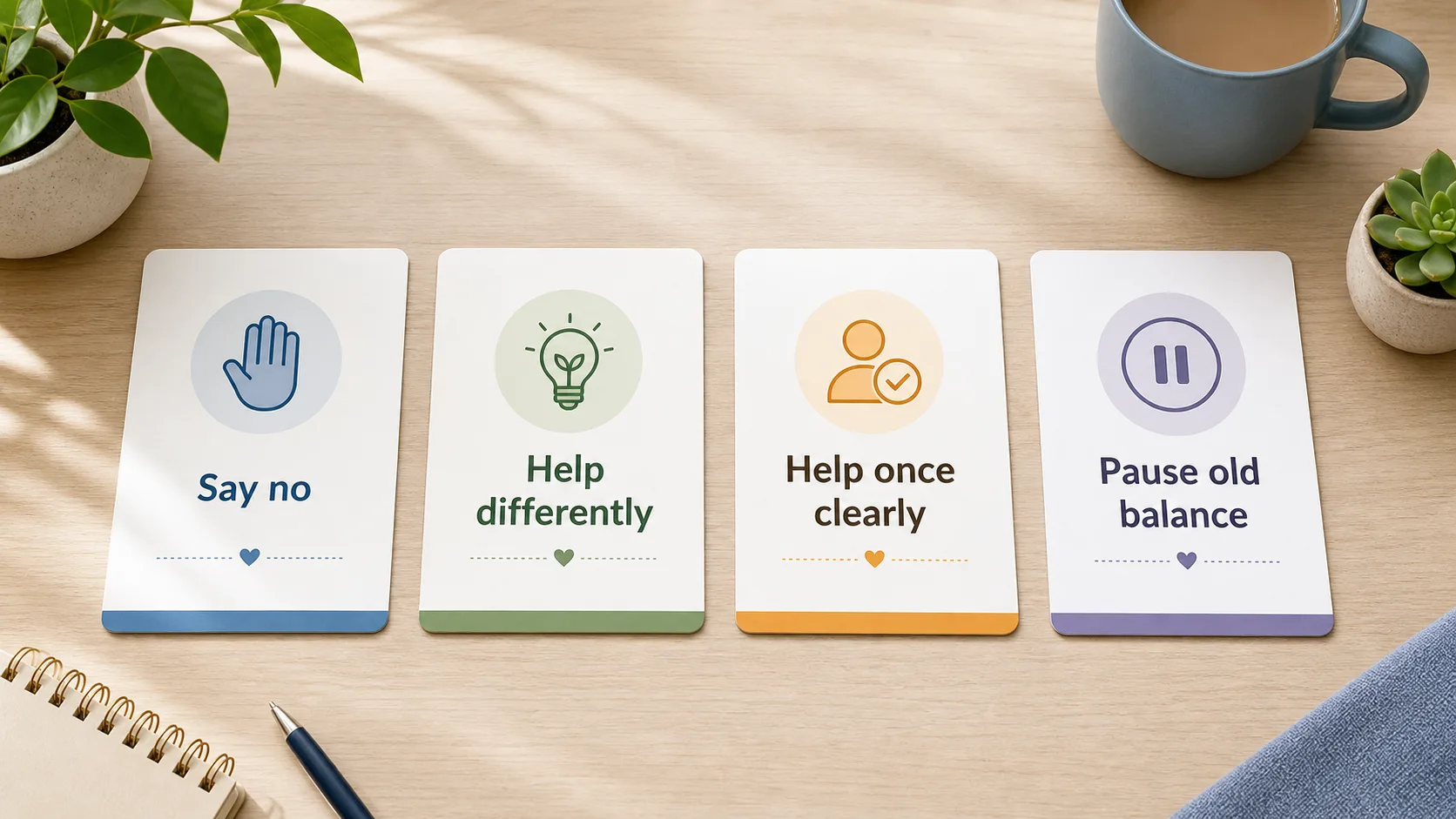
Choose one clear boundary before you reply
Say no completely
Use this when lending again would create stress, resentment, or risk for you. You do not need to prove that your reason is good enough.
“I’m not able to lend money. I care about you, but I need to be clear about this.”
Help without lending money
Use this when you want to be supportive but cannot be the source of money.
“I can’t lend money, but I can help you think through options if that would help.”
Help once, but clearly
Use this only if you can afford the delay and you will not resent the money being repaid late.
“I can help this time, but I need us to write down the amount, whether repayment is expected, and when we will check in.”
Pause until the old balance is settled
Use this when there is already money open from a previous request.
“I can’t lend more while the previous amount is still open. Let’s first get clear on what remains and what the plan is.”
What to say to a friend who keeps borrowing money
These scripts are short enough for a text message and direct enough to keep the boundary from becoming a debate.
When they still owe you
Use this when the new request is not separate from the old balance.
When you want to stop the pattern
Use this when repeated borrowing has started to change how the friendship feels.
When the amounts are small but repeated
Use this when the latest ask looks minor but the total pattern matters.
When you cannot afford it
Use this when you want to keep your financial details private.
When you want to help without money
Use this only if you genuinely want to offer non-money support.
When you are willing to help one last time
Use this only if you can afford the delay and will not resent the money being repaid late.
When you need a plan for the old amount
Use this when repayment is expected, but one payment may not be realistic.
The best message is usually short. The more you explain, the more the conversation can turn into a debate about whether your boundary is fair.
What if they push back?
If your friend pushes back, try not to defend your whole personality. Repeat the boundary, acknowledge the stress, and avoid turning the conversation into a trial about whether you are a good friend.
A calm boundary does not require the other person to like it immediately. It only requires you to say what you can honestly do and then keep the boundary consistent.
When a simple boundary is enough
If you do not want to keep lending money, you do not need a calculator, app, or long explanation. A short no may be the healthiest answer.
Use a simple boundary when there is no open balance to track, no repayment plan to discuss, and no part of you is genuinely comfortable lending again.
If you mostly need wording, use the guide to politely say no when someone asks for money.
When a clear record helps
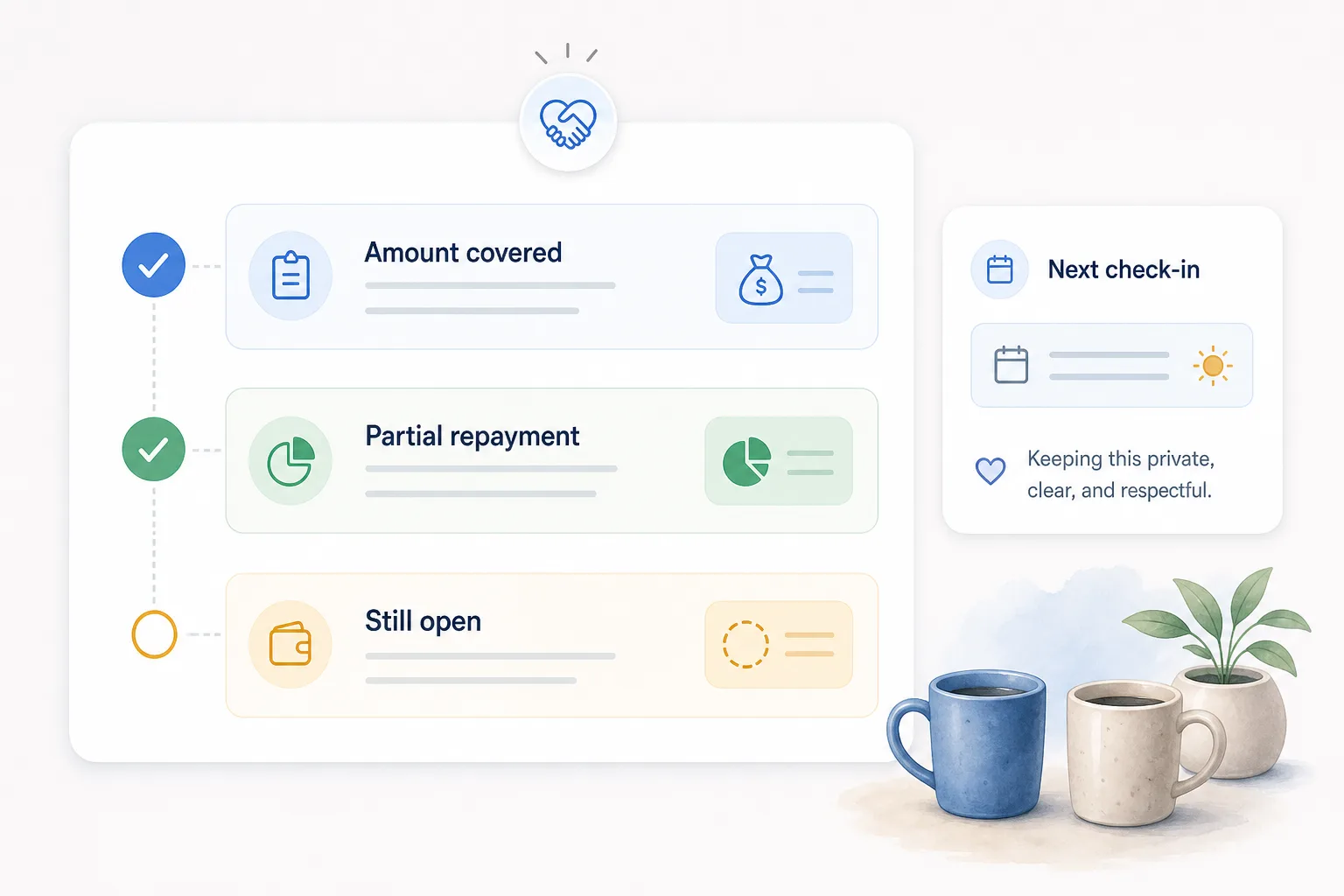
If you decide to keep helping, or if there is already an open balance, the problem is no longer just the message. It is the record. You need to know what happened, what was repaid, what is still open, and what boundary you agreed to next.
You Owe Me helps you keep one private record of money between real people: amounts, reasons, repayments, partial repayments, notes, reminders, and running balances. It does not lend money, collect money, or pressure anyone. It simply helps you keep the balance and the conversation clear.
Use a simple message if all you need is a boundary. Use You Owe Me if the same person has an open balance, repeated requests, partial repayments, or changing expectations over time.
Frequently asked questions
Is it wrong to stop lending money to a friend?
No. You can care about a friend and still stop lending money. If lending has started to create stress, resentment, or confusion, a clear boundary is often kinder than another vague yes.
What if my friend still owes me from last time?
Do not treat the new request as separate. First write down what is still open, what has been repaid, and what expectation was set before. Then decide whether you need a repayment plan, a boundary, or a pause on any new lending.
How do I say no to a friend who keeps asking for money?
Keep it short and respectful: “I’m not able to keep lending money, but I wanted to be honest instead of vague.” You do not need a long excuse. If you have already helped before, it is okay to say your boundary has changed.
Should I lend money again if they always pay back late?
Only if you can honestly afford the delay and will not resent it. If late repayment has become the pattern, set the expectation before money moves: amount, repayment timing, and what happens if timing changes.
What if they get angry when I say no?
Stay calm and repeat the boundary. You can acknowledge that the situation is stressful without changing your answer. Avoid arguing, shaming, or defending every detail of your finances.
Should I keep a record of money I lend to friends?
Yes, if repayment is expected or money has moved more than once. A simple record helps both people remember the same facts: amount, date, reason, repayments, and remaining balance.
Keep the balance clear before the friendship gets heavier
Repeated borrowing gets harder when the only record is memory, old messages, or a promise both people remember differently. If you decide to keep helping, keep the amount, repayment expectation, partial repayments, and check-ins in one place.
You Owe Me is for money between real people. One person can keep the record, and the other person does not need to install the app.
Related guides and tools
If repeated borrowing has turned into regular help with rent, bills, groceries, or other ongoing costs, use the transition planner to decide what stops, what tapers, and what old balance remains separate.
Published · Updated