Money owed
How to Confront Someone Who Owes You Money Without Shaming Them or Ruining the Relationship
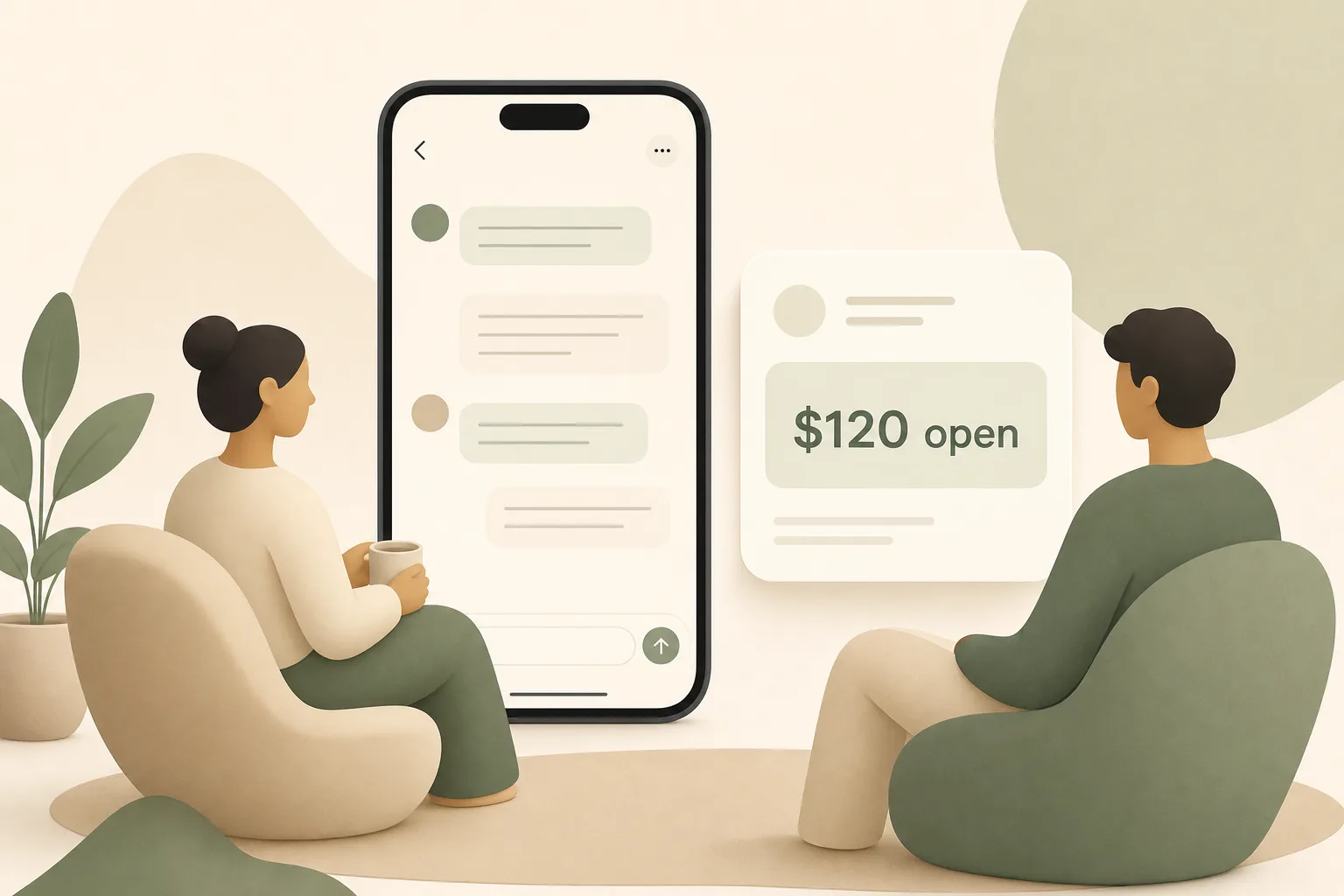
To confront someone who owes you money without ruining the relationship, do not make it a dramatic confrontation. Make it a calm clarification. Name the amount, mention what it was for, ask for a clear next step, and avoid blame, sarcasm, or emotional judgment.
Quick example
“Hey Alex, I wanted to check in about the $120 from the concert tickets. Could you send it by Friday, or let me know what timing works?”
This works because it is specific, neutral, and easy to answer. It names the amount, gives the context, and asks for a clear next step without accusing the other person of bad intentions.
In short
Keep the conversation calm, specific, and answerable
A good confrontation about money is not a dramatic accusation. It is a calm clarification: name the amount, explain what it was for, ask for a clear next step, and keep the tone neutral. If they need more time, ask for a date or plan. If they ignore you repeatedly, set a boundary and stop relying on memory.
Before asking for payment, make sure the amount is clear. If your records do not match, reconcile the balance without turning either version into a verdict.
Direct answer
The relationship-safe confrontation formula
Amount + context + clear next step + calm tone.
A good confrontation message says exactly what money is still open, reminds them what the money was for, asks for a concrete next step, and leaves room for a reasonable explanation.
It does not accuse them of avoiding you, bring up every previous frustration, make the conversation about their character, apologize for asking about a real balance, or threaten the relationship before you know what is happening.
A direct message that is not aggressive
“Hey Alex, I wanted to follow up on the $120 from the tickets. Could you send it this week, or let me know what timing works?”
That is direct, but not aggressive. It makes the situation clear without turning the unpaid balance into a personal attack.
If the situation is still light, start with a polite reminder. If it already feels overdue, ignored, or emotionally heavier, use the clearer scripts below. If the hard part is deciding whether asking is fair, read Am I Wrong for Asking for My Money Back?. If the hard part is when to send the message, read when to ask for money back or send a repayment update.
Should you shame someone who owes you money?
No. If you want the best chance of getting a useful answer, do not shame them publicly or online. Public pressure can make the relationship worse, make the person defensive, and turn a repayment question into a personal conflict. Use one private, specific message instead: name the amount, name the context, ask for a date, and set a boundary about future money if they keep avoiding the question.
“Hey [Name], I’m keeping this private, but I need to close the loop on the [amount] from [what it was for]. Please let me know by [date] when you can send it or what plan works.”
Do not post their name, tag them, share screenshots, involve a group chat, or try to embarrass them into paying. If the amount is serious, keep records and get proper advice instead of escalating with threats.
8 messages you can copy when someone owes you money
Instead of shaming them online
Use this when you are frustrated enough to post about it, but still want the best chance of getting a useful answer without escalating publicly.
Calm first message
Use this when you have not directly asked yet, but the balance has been open long enough that silence is becoming awkward.
Warm but direct follow-up
Use this when the relationship matters and you want to make the tone explicit: clear, but not hostile.
After they promised to pay
Use this when they already gave a repayment date and that date is near, today, or already passed.
After they paid part of it
Use this when someone paid some of what they owe and you need to ask about the remaining balance without sounding ungrateful.
If this is your exact situation, read the full guide on following up after a partial repayment.
If they need more time
Use this when the issue may be timing, not avoidance. If the remaining balance needs to be paid gradually, turn the balance into a simple repayment plan.
If they ignored your first reminder
Use this when you already sent a normal reminder and they have not answered.
Firmer but still respectful
Use this when the balance has been ignored or delayed more than once and you need a clear answer.
Should you confront them, remind them, or wait?
How to confront someone who owes you money calmly
What not to say when confronting someone about money
The fastest way to ruin the tone is to turn the unpaid balance into a judgment of the person’s character.
| Avoid | Say instead |
|---|---|
| “Are you ever going to pay me back?” | “Could you let me know when you’ll be able to send the $80?” |
| “I guess you just don’t care.” | “I wanted to check in because this is still open on my side.” |
| “You always do this.” | “I want to keep this specific to the current balance.” |
| “It’s not even about the money anymore.” | “I’d like to get clarity so this doesn’t stay awkward.” |
| “I shouldn’t have to ask.” | “I’m following up so we both have the same expectation.” |
These replacements are not weaker. They are more effective because they keep the conversation focused on the open balance instead of turning it into a fight about character.
What to say based on the relationship
Friend
“Hey, I wanted to check in about the $60 from last weekend. Could you send it when you get a chance, or let me know what timing works?”
Best when the relationship is casual and the person probably forgot.
Close friend
“Hey, I don’t want this to become weird between us, so I wanted to bring it up clearly. I still have $120 open from the trip. Can we figure out when to settle it?”
Best when preserving the relationship matters as much as the money.
Family member
“Hey, I’m keeping track of the family reimbursements and still have $75 open from the pharmacy pickup. Could you send it when it works for you?”
Best for family purchases, parent-related costs, sibling reimbursements, or repeated help. For ongoing family expenses, use a family reimbursement tracker.
Roommate
“Hey, your part of the utilities and household supplies came to $95. Could you send it by Friday so we can close out this month’s bills?”
Best for rent extras, utilities, groceries, household supplies, and monthly settle-ups. For repeated household costs, use a roommate expense tracker.
Partner
“I don’t want this to feel like scorekeeping. I just want us to stay clear on shared costs. I have $48 open from this week - can we decide how to handle it?”
Best when clarity matters but the relationship tone is sensitive. For shared costs, see the expense tracker for couples.
Client or work-related contact
“Hi [Name], I’m following up on the outstanding [amount] from [work/item]. Please let me know when I can expect payment.”
Keep this simple and professional. Do not mix friendship wording with work-related payment follow-up.
A calm escalation path when someone keeps ignoring you
What if they react badly?
How YouOweMe makes this easier
The hardest part of confronting someone about money is often not writing one sentence. It is knowing exactly what the sentence should be based on.
That gets harder when:
- several expenses are involved
- someone already paid part of it
- the balance changed over time
- you waited too long
- the repayment date was promised but not recorded
- you are relying on memory or old chat messages
YouOweMe helps you keep money between real people clear: track who owes whom, keep one running balance per person, record repayments and partial repayments, keep a timeline of what happened, set reminders when timing matters, and generate calmer follow-up messages from the real balance and history.
Use a one-time reminder tool if you only need one message. Use YouOweMe if the balance changes over time, includes several expenses, partial repayments, reminders, repayment history, or repeated follow-ups with the same person.
It does not lend money, collect money, or pressure anyone. It simply helps you keep the balance and the conversation clear.

Keep the balance clear before the conversation gets heavier
If this is a one-time message, use the free reminder generator. If money with this person keeps changing, track it in YouOweMe so the next conversation starts from a clear balance instead of memory.
Frequently asked questions
Should I shame someone who owes me money online?
No. Keep it private and avoid public posts, screenshots, tags, group pressure, or anything meant to embarrass them. Public shaming can make the person defensive and turn a repayment question into a personal conflict. Send one calm direct message that names the amount, context, and date instead.
What should I do if someone keeps ignoring me when they owe me money?
Send one more private, specific follow-up. If they answer vaguely, ask for a real date instead of accepting “soon.” If they ignore you again, set a boundary about future lending or shared costs, stop sending repeated emotional messages, and keep records.
How do I approach someone who owes me money?
Approach them privately with a short, specific message. Name the amount, what it was for, and the next step you need. Use calm wording such as: “Hey [Name], I wanted to follow up on the [amount] from [what it was for]. Could you send it by [date], or let me know what timing works?”
How do you confront someone who owes you money without being rude?
Keep the message short, specific, and neutral. Mention the amount, what it was for, and ask for a clear next step. For example: “Hey, I wanted to check in about the $80 from last month. Could you send it by Friday, or let me know what timing works?”
What is the best thing to say to someone who owes you money?
A good message is: “Hey [Name], I wanted to follow up on the [amount] from [what it was for]. Could you send it by [date], or let me know what timing works?” It is direct without being aggressive.
How long should you wait before confronting someone who owes you money?
If there was no agreed date, a light reminder after one to two weeks is usually reasonable for small informal amounts. If there was a promised date, follow up soon after that date passes. Waiting too long often makes the message feel heavier.
What if someone ignores you when they owe you money?
Send one more calm but direct message asking for a clear update. If they still ignore you, the issue may be more about boundaries than wording. You may need to stop covering costs or lending money to that person in the future.
Should I confront someone by text or in person?
Text is usually better for simple repayment follow-ups because it keeps the amount and context clear. In-person conversations may be better when the amount is large, the relationship is already strained, or several reminders have been ignored.
What if they say they cannot pay right now?
Ask for a clear plan instead of pushing for immediate payment. You can say: “No problem if you need more time. What date works, or would it help to split it into smaller payments?”
How do I confront a friend who owes me money?
Use friendly but clear wording: “Hey, I don’t want this to become awkward, so I wanted to check in about the $60 from last weekend. Could you send it when you get a chance, or let me know what timing works?”
How can I avoid this situation next time?
Write down the amount, context, date, and any repayment plan when the money changes hands. If this happens repeatedly, use a running balance app like YouOweMe so the next message is based on a clear record instead of memory.
Related guides and tools
Published · Updated