SHARED EXPENSES
How to Split a Bill Fairly When One Person Ordered Less
An even split is usually reasonable when everyone ordered roughly the same amount or agreed to split evenly beforehand. When one person ordered much less, the clearest default is usually to keep personal items with the people who ordered them and divide only the items that were genuinely shared.
Choose the method that fits your bill, then calculate the exact shares.
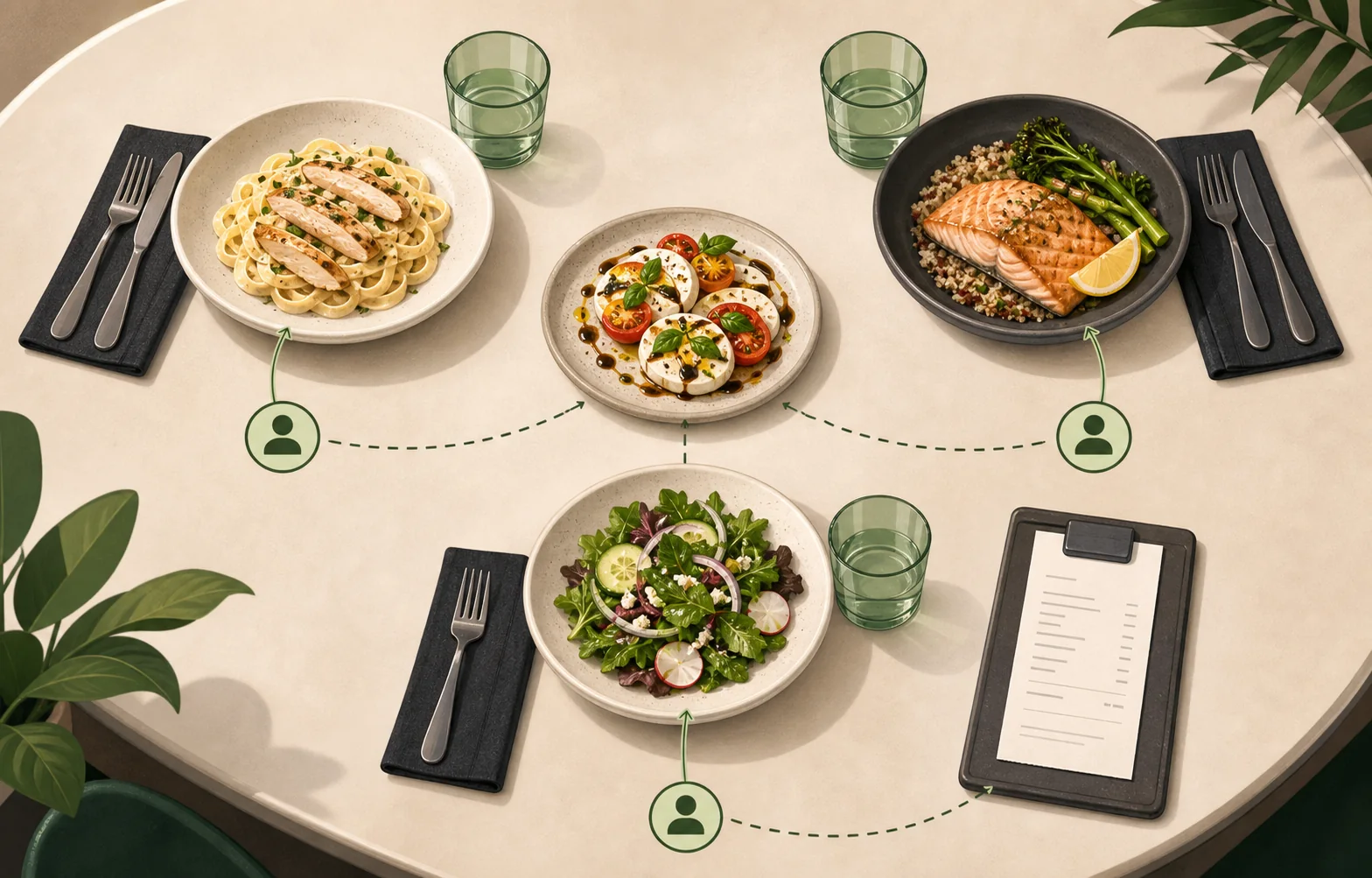
Should the bill still be split evenly?
Sometimes. An even split is a convenience method, not a rule. It works well when orders are close in price and everyone is comfortable with it. When the difference is obvious—one person had a small meal while others added drinks, appetizers, or premium dishes—an itemized or hybrid split is usually clearer.
Use this test: would the equal split make someone pay a meaningful amount for personal items they did not order? If yes, keep the personal items with the people who ordered them and divide only what was actually shared.
Use an itemized or hybrid split when:
- Only some people ordered alcohol or premium drinks.
- One person ordered a much more expensive entrée.
- Someone had only a small meal while others ordered several courses.
- Someone arrived late or skipped part of the meal.
- The table shared some dishes, but most orders were personal.
The goal is not perfect accounting. It is avoiding an obvious mismatch without turning the meal into an argument.
Choose the fairest split
Start with the lightest method that still feels clear to everyone. These four approaches cover most group bills.
Equal split
- Best when
- Everyone ordered roughly similar amounts and agrees to keep it simple.
- How it works
- Divide the final total evenly between everyone included.
- Watch for
- It can feel unfair when personal orders differ substantially.
Itemized split
- Best when
- Most items were personal and it is clear who ordered each one.
- How it works
- Each person covers their own items, plus an agreed share of tax, tip, or service charges.
- Watch for
- Agree on how shared charges will be divided before calculating the final amounts.
Hybrid split
- Best when
- Personal orders differed, but the group also shared appetizers, sides, bottles, or desserts.
- How it works
- Keep personal items individual and divide each shared item only among the people who shared it.
- Watch for
- Use separate lines for personal and shared items so the calculation stays understandable.
Separate checks
- Best when
- The group wants no later calculation and the venue can bill people separately.
- How it works
- Each person pays their own check, with shared items assigned by agreement.
- Watch for
- This may not be possible after ordering or when several people shared the same dishes.
Once the group agrees on the method, the rest is calculation—not negotiation.
Worked example: equal split versus hybrid split
Three friends share one appetizer, but their personal orders are very different. The amounts below are illustrative, and the same method works in any currency.
| Person | Personal order | Shared appetizer |
|---|---|---|
| Maya | $18 salad | Included |
| Alex | $52 steak and wine | Included |
| Sam | $38 pasta and cocktail | Included |
- Shared appetizer$18
- Base total$126
- Tax and tip combined25%
- Final total$157.50
Equal split
$157.50 ÷ 3 = $52.50 each
This is fast and easy, but it makes all three people responsible for the same amount even though their personal orders were very different.
Hybrid split
Divide the $18 appetizer equally, keep each personal order with the person who ordered it, then apply the 25% tax and tip to each subtotal.
| Person | Personal items | Shared item | Tax and tip | Fair share |
|---|---|---|---|---|
| Maya | $18.00 | $6.00 | $6.00 | $30.00 |
| Alex | $52.00 | $6.00 | $14.50 | $72.50 |
| Sam | $38.00 | $6.00 | $11.00 | $55.00 |
| Total | $108.00 | $18.00 | $31.50 | $157.50 |
An equal split is not dishonest; it is a convenience method. The hybrid split is clearer in this example because the personal orders differ substantially.
Common situations that change the answer
The fairest method often depends on what was personal, what was genuinely shared, and what the group agreed before anyone paid.
Only some people ordered alcohol
Keep each drink with the person who ordered it. If a bottle was shared by only part of the table, divide it only among those people. Shared food can still be split separately.
The table shared appetizers or dessert
Treat each shared dish as its own expense and divide it among the people who actually shared it. You do not need to calculate who ate every bite.
Someone arrived late or left early
Include them only in the items and shared costs they participated in. Do not automatically divide the whole meal by the final number of people at the table.
Someone is the birthday guest
Clarify whether the group is covering that person before calculating shares. If so, divide the guest’s agreed items among the people who offered to cover them.
The group agreed to split evenly beforehand
That agreement matters. If the final orders are much more uneven than expected, raise it calmly before anyone pays rather than silently accepting a split that will create resentment.
The bill includes tax, tip, or a service charge
First agree on the personal and shared items. Then use one consistent method for the remaining charges: allocate them proportionally to each subtotal, or divide them evenly if everyone agrees.
This guide does not set a tipping rate. It only helps divide the final amount already on the bill.
What to say without sounding cheap
Keep the message brief, factual, and focused on the method. You do not need to defend every menu choice or accuse anyone of ordering too much.
A short, neutral sentence usually works better than a long explanation. State the method you are suggesting, then let the group respond.
How to calculate different orders with the Split Expense Calculator
The calculator is most useful after the group has agreed on the method. It can combine several expense lines, different payers, and different sets of included people into one clear settlement.
- Add everyone involved in the bill.
- Enter each person’s personal order as a separate expense.
- Choose the person who actually paid each expense. If one card covered the whole restaurant bill, choose that person as the payer for every line.
- For each personal order, include only the person responsible for that order.
- Add every shared dish, bottle, or other shared item as a separate expense and include only the people who shared it.
- Add tax, tip, and service charges using the method the group agreed on. The simplest accurate approach is to include each person’s allocated amount in the relevant expense lines before entering them.
- Review the settlement to see who owes whom.
Use the calculator when the group has agreed on the method and now needs the numbers.
If the real complication is when different people paid rather than what each person ordered, see which method fits when people paid at different times.
When one person paid first, the problem changes
The original split and the repayment status are different questions.
- The split answers:
- What should each person pay?
- Payback tracking answers:
- Who has actually paid, who paid partly, and what remains open?
Keep those two layers separate. Changing a repayment status must not change the original agreed share.
If the original split was clear but the cost changed later because someone canceled or a refund arrived, recalculate the shared cost after the cancellation.
| What happens next | Best next action |
|---|---|
| Everyone pays immediately | The Split Expense Calculator is enough. |
| One person paid and everyone else will repay later | Use the Group Payback Calculator to check paid and open shares. |
| Some people paid only part | Keep the original share, the amount paid, and the amount still open as separate values. |
| The same people share costs repeatedly | Use a running balance or Shared Expense Tracker instead of rebuilding one restaurant bill each time. |
Keep the agreed record clear
You Owe Me does not decide what is fair—the group does. Once the shares are agreed, one person can use You Owe Me to keep a calm record of who paid, who partly paid, and what remains open. Other people do not need to install the app just to understand the balance.
For a fuller record-first workflow, see how to track who paid you back for a group expense.
Aim for a clear split, not a perfect accounting exercise
Fair does not have to mean calculating every crumb. The useful goal is a method everyone can understand before hidden resentment builds.
- An equal split can be reasonable when orders were similar and everyone agreed to it.
- Itemizing does not require tracking every bite or minor difference.
- Ordering more does not automatically mean someone was taking advantage.
- A prior agreement matters, even when another method would have produced different numbers.
- If the difference is tiny, keeping the meal simple may be worth more than perfect precision.
- If the difference is meaningful, a calm itemized or hybrid split is usually clearer than staying silent.
The best split is not the one that looks most sophisticated. It is the lightest method that reflects what people actually ordered and can be explained without blame.
Frequently asked questions
Is it rude to refuse an equal bill split?
No. It is reasonable to ask for an itemized or hybrid split when orders differ meaningfully. Raise it calmly and focus on the method rather than who ordered “too much.” If the difference is small and everyone had already agreed to split evenly, keeping it simple may be the better choice.
What if we agreed to split evenly before ordering?
That agreement should carry weight. If the final orders are much more uneven than expected, say so before anyone pays: “I know we planned to split evenly, but the totals are quite different. Would it work to keep personal items separate and split the shared items?” If the group keeps the original agreement, clarify the rule before the next meal so nobody is surprised.
How should we handle tax, tip, or a service charge?
First agree on the personal and shared items, then use one consistent method. You can allocate the remaining charges proportionally to each person’s subtotal, or divide them evenly if the group agrees. This guide does not decide how much to tip; it only helps divide the final amount already on the bill.
What if only some people ordered alcohol?
Keep each drink with the person who ordered it. If a bottle was shared by only some people, split it among those people. Shared food can still be divided separately among everyone who shared it.
What if several dishes were shared?
Enter each shared dish separately and include only the people who ate it. In a casual group, you do not need perfect bite-by-bite accounting. Use the smallest grouping everyone recognizes as fair.
Can the Split Expense Calculator handle different orders?
Yes, by using separate expense lines. Add personal orders as expenses with only the relevant person included, then add shared items as separate expenses with the people who shared them. The Split Expense Calculator divides each line equally among the selected participants and does not support arbitrary weighted percentages.
What if one person paid for the whole table?
First agree on the original shares and calculate them. If everyone settles immediately, the split calculation is enough. If payments arrive later or only partly, keep the original share separate from the repayment status and use the Group Payback Calculator or You Owe Me to track what remains open.
What if the same group shares expenses regularly?
A one-off restaurant calculation may no longer be the best system. A running balance or Shared Expense Tracker is usually clearer when the same people take turns paying across several days or purchases.
SETTLE IT CLEARLY
Choose the shares first. Track the paybacks only if they stay open.
Use the free calculator for the original bill. If one person paid first and repayments will arrive later, You Owe Me can keep paid, partly paid, and remaining amounts in one calm record.
Published